New furniture and indoor air – why it "smells new" and what you can do
Do you know that particular smell when a new sofa, cabinet or mattress arrives home? It isn't just your imagination: new furniture and furnishing materials release volatile organic compounds – VOCs such as formaldehyde – into the air, especially during the first few weeks. In this guide we explain what's going on and how to keep your indoor air fresh even after new purchases.
Where do emissions from new furniture come from?
Many pieces of furniture are made from board materials, glues, coatings, paints and textiles. These can release VOCs into the air. The most familiar example for consumers is **formaldehyde**, used among other things in the glues for board materials.
- Studies show that bringing new furniture into the home can raise the formaldehyde level in indoor air.
- Emissions are highest right after purchase and decrease over time.
- VOCs are released from many other sources too: building materials, cleaning agents, cosmetics and cooking (source: the Finnish Lung Health Association).
What is the M1 emission class?
When buying new furnishings, it pays to look at the M1 emission class. It is a label for low-emission products granted by the Building Information Foundation (Rakennustietosäätiö) in Finland:
- M1 is the strictest class in the system (M2 and M3 are less strict).
- A product's emissions are tested in a chamber test that measures, among other things, VOC/TVOC, ammonia and formaldehyde.
An M1-labelled product is a good starting point, but it's worth remembering that all new materials release some compounds regardless of classification.
How to reduce emissions from new furniture in your indoor air
1. Ventilate effectively. Good ventilation quickly reduces the VOC level in indoor air. Keep mechanical ventilation running and ventilate especially during the first weeks.
2. Let new furniture "air out". Where possible, let a new mattress, sofa or cabinet stand for a while – for example in storage or a well-ventilated space – before use.
3. Favour low-emission (M1) products whenever possible.
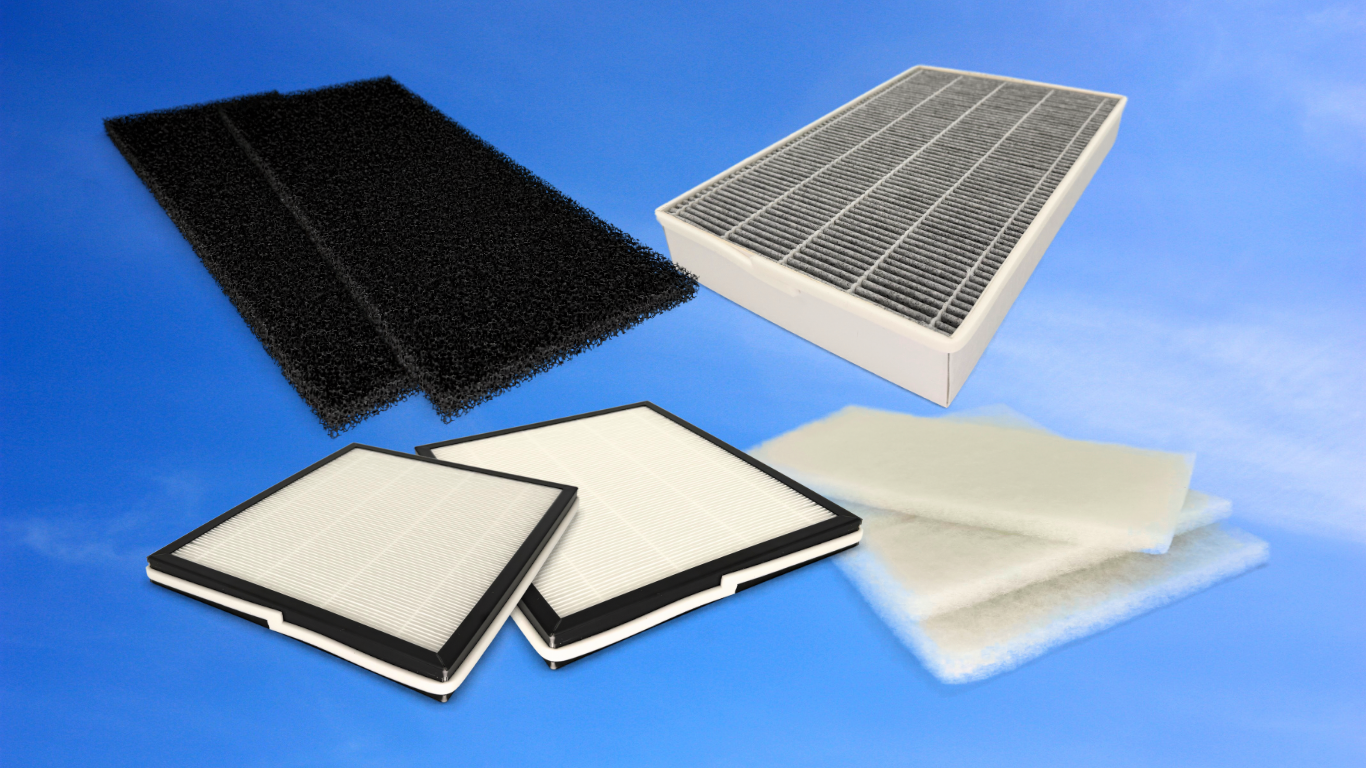
4. Use activated carbon filtration. Activated carbon captures odours and gaseous compounds that an ordinary particle filter doesn't remove. Activated carbon filters are available for many ventilation units (e.g. certain Ilto and ILOX models) – a useful addition especially after renovation or new purchases.
A handy rule of thumb: a particle filter stops dust, activated carbon removes odours and gases.
Summary
The smell of new furniture is often a sign of volatile compounds that fade over time. The most effective way to keep indoor air fresh is good ventilation – and when you also want to tackle odours and gases, activated carbon filtration is the right tool.
Would you like an activated carbon filter for your ventilation unit, or are you unsure which model fits? Contact Suodatinkeskus – we'll help you find the right one.
The information is general in nature; this text is not health advice.