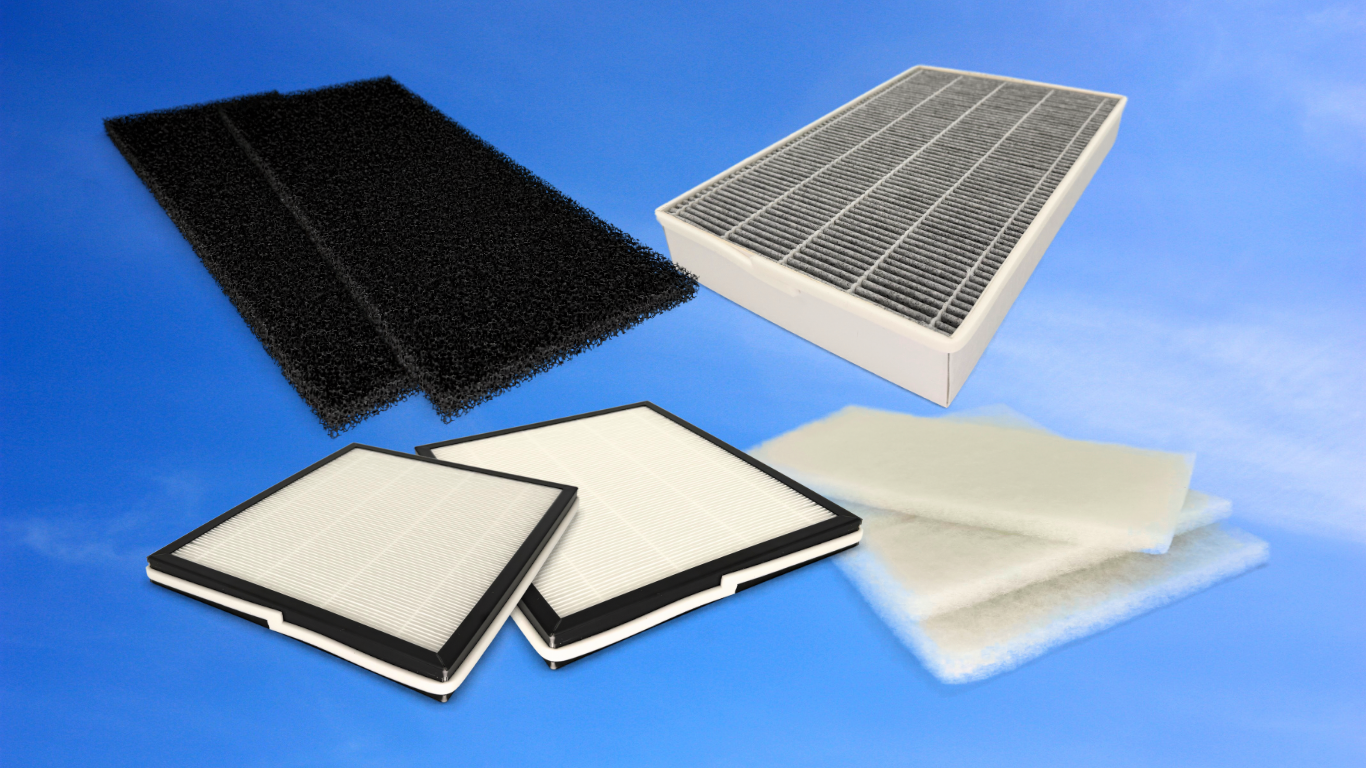
What does the filter class mean?
The filter class indicates how effectively the filter separates particles of different sizes from the air. The current standard is ISO 16890, which replaced the earlier EN 779 classification. Because of differences in test methods, the old and new classes don't match exactly, but well enough as a guideline.
The ISO 16890 classes in brief
ePM1 – captures the very smallest particles (under 1 µm) that reach deepest into the lungs. The most effective class. (≈ old F7–F9)
ePM2.5 – separates particles under 2.5 µm. (≈ M6)
ePM10 – separates particles under 10 µm, including pollen and coarse dust. (≈ M5)
Coarse – coarse filtration, mainly protecting against larger dust. (≈ G3–G4)
Which class for the home?
In home ventilation units the most common supply-air fine filter is F7 (≈ ePM1), which effectively captures pollen and fine particles. For the exhaust air a coarse-class is often enough. The key is to choose the class your unit was designed for – the wrong class can upset the balance of the ventilation.
Filter materials
Synthetic fibre (polyester) – the most common material: moisture-resistant, durable and a good all-round choice.
Glass fibre – a traditional fine-filter material with a large filtering area.
Coarse filter cloth – a more open structure for larger dust, often as a pre-filter.
Fine filters are usually pleated, which increases the filtering area and reduces the pressure drop. A low pressure drop means lower energy consumption and better airflow.
Remember to change in time
Even the best class won't help if the filter is clogged. Change your ventilation filters about 1–2 times a year, at the latest when they are visibly dirty.
Wondering which class suits your unit? Check the machine model on the product card or ask us – we'll help you find the right filter.